

When you've built significant wealth, you quickly realize the standard playbook for financial advice just doesn't cut it anymore. The guidance that works for the mass affluent — maxing out a 401(k) or basic diversification — simply isn't equipped to handle the complexities that come with a high-net-worth portfolio. Finding the right financial advisor for high net worth clients is crucial.
A financial advisor specializing in high-net-worth clients offers something entirely different. They operate less like a conventional advisor and more like a personal CFO, focusing on preserving and growing large asset bases through a sophisticated, integrated approach that weaves together advanced tax planning, estate structuring, and bespoke investment strategies.
Why High-Net-Worth Financial Advice Is Different
If you’ve spent years building a business or have experienced a major liquidity event, you know your financial world is interconnected. A decision about your company stock can have massive tax implications, which in turn affects your estate plan and philanthropic goals. Standard financial advice often misses these connections.
This is where a true high-net-worth advisor steps in. Their role is to quarterback your entire financial life, orchestrating a team of specialists to ensure every decision is cohesive. It’s not a luxury; for protecting what you’ve built, it's an absolute necessity.
The Shift From General Advice to a Specialized Team
Most financial advisors focus on one primary goal for their clients: accumulation. Their job is to help people grow a nest egg for retirement. But for high-net-worth individuals and families, the focus shifts dramatically to wealth preservation, tax mitigation, and multi-generational legacy planning.
The table below breaks down some of the key distinctions between a standard advisor and one geared toward high-net-worth needs.
As you can see, the scope is fundamentally different. An HNW advisor is dealing with challenges that a generalist is simply not trained to handle.
The real value isn't just in managing your investments; it's in the coordination. A top-tier advisor ensures your CPA is executing tax-loss harvesting in sync with your investment strategy and that your attorney is structuring trusts to align perfectly with your family's long-term financial goals.
Think about a business owner preparing to sell their company. A specialized advisor doesn't just show up after the sale to invest the cash. They're involved years in advance, helping structure the deal for maximum tax efficiency and building a comprehensive post-liquidity plan to ensure that one-time event secures the family’s future for generations.
Meeting the Demands of a Growing Market
The need for this level of specialized guidance has never been greater. The global wealth management industry was responsible for an astonishing $159 trillion in assets in 2024. That figure is expected to surge to $178 trillion by 2029.
To keep up, wealth managers are aiming for a 13.7% increase in assets under management in 2025 alone, primarily by expanding their specialized services for affluent clients. You can explore the full industry growth survey from Natixis to see just how quickly this space is evolving.
This explosive growth underscores why choosing the right partner is so critical. As your financial life becomes more complex, you need an advisor whose capabilities are already ten steps ahead, anticipating needs you haven’t even considered yet.
Decoding the Credentials That Actually Matter

If you're looking for a financial advisor, you've probably noticed the alphabet soup of letters that can follow their name. It’s easy to get lost, but for high-net-worth clients, a few of these credentials carry far more weight than others.
Knowing which ones to look for is your first line of defense. It’s how you separate the true specialists from the generalists. We’re not talking about basic licenses — we’re looking for designations that prove an advisor has deep, rigorous training in complex investments, tax strategy, and wealth transfer.
The Premier Designations for High-Net-Worth Advisory
In my experience, three credentials consistently rise to the top. When an advisor holds one or more of these, it signals they’ve dedicated their career to mastering the very skills needed to protect and grow substantial wealth.
- Chartered Financial Analyst (CFA): This is often called the pinnacle of designations in investment management for a reason. The CFA is a demanding, graduate-level program focused on investment analysis, portfolio management, and asset allocation. An advisor with a CFA charter is exceptionally qualified to manage the complex, multi-asset portfolios — including alternatives — that high-net-worth individuals often have.
- Certified Financial Planner (CFP): A CFP professional is your quarterback. They’re trained to build a comprehensive plan that ties together every piece of your financial life, from retirement and insurance to advanced estate and tax planning. This holistic view is critical, ensuring your investment strategy actually supports your bigger family and legacy goals.
- Certified Private Wealth Advisor (CPWA): This is a highly specialized certification built from the ground up for advisors serving clients with $5 million or more in assets. The entire curriculum centers on the unique challenges of managing significant wealth: accumulation, preservation, and distribution. It directly addresses things like managing concentrated stock positions after a business sale or crafting a multi-generational philanthropic strategy.
Think of an advisor with a CPWA as a personal CFO for your family. They’ve been trained to handle major liquidity events, structure your assets for tax efficiency, and act as the central point of contact for your legal and accounting teams.
Verifying Credentials and Asking the Right Questions
Finding an advisor with the right letters after their name is a great start, but your job isn't done yet. You have to verify those credentials and, more importantly, dig into their real-world experience.
You can easily confirm an advisor’s standing and any disciplinary history on the official websites for the CFA Institute or the CFP Board. It only takes a few minutes.
Once you’ve done that, shift your focus to experience-based questions. Let's say you're a business owner who just had a major exit. Don't just ask if they've worked with entrepreneurs. Get specific: "Can you walk me through a case where you helped a client manage a liquidity event like mine? What were the key tax and estate planning hurdles, and how did you navigate them?"
Questions like this force a potential financial advisor for high net worth clients to move past theory. Their answer will tell you everything you need to know about their practical experience with situations that mirror your own. You can also dig deeper into their business model by exploring the differences between a fiduciary and a fee-only advisor, which is another crucial distinction.
The Value of Experience in a Shrinking Talent Pool
Locking in an advisor with both top-tier credentials and proven experience is more critical than ever. The U.S. wealth management industry is facing a massive talent drain, with an estimated 110,000 advisors expected to retire over the next decade. McKinsey's analysis projects this could leave a talent shortfall of up to 110,000 advisors by 2034.
For affluent families, this impending shortage places a huge premium on finding and building a lasting relationship with a seasoned, well-credentialed advisor. The goal is to find a partner who can provide stable, expert guidance for decades to come.
The Bespoke Services You Should Expect
A top-tier financial advisor for high net worth clients does far more than just manage investments. Think of them as your personal CFO, delivering a coordinated strategy that looks around corners and solves complex financial problems before they even surface. It's a proactive partnership, not a reactive service.
When you're dealing with substantial wealth, everything is connected. Exercising stock options will hit your tax bill, which in turn affects your estate plan and charitable giving. A seasoned advisor sees this web of cause-and-effect and builds a plan where every piece works in concert.
More Than Just Investment Management
Standard wealth management often stops at picking stocks and rebalancing your portfolio. For high-net-worth families and entrepreneurs, that’s just table stakes. You need services that manage, protect, and grow your wealth in a way that reflects your unique circumstances — the kinds of details a generalist would almost certainly miss.
Take a business owner getting ready for a sale. They don’t just need a place to deposit the check. They need sharp guidance on structuring the sale for maximum tax efficiency, planning for life after the deal closes, and building a diversified portfolio that will secure their family’s future for generations. This is the level of detail you should be demanding.
To put it in perspective, a great HNW advisor provides a suite of core services designed to handle the complexity that comes with significant wealth. These are the foundational pillars of a comprehensive financial strategy.
Core Services from HNW Financial Advisors
These services form the bedrock of a solid advisory relationship, ensuring all the critical bases are covered from day one.
Comprehensive Family Office Capabilities
One of the most valuable offerings from a high-net-worth advisor is access to what are known as family office services. This isn't just about managing money; it's about managing the entire financial life of your family, bringing clarity and control to what can often feel chaotic.
Key services you might see include:
- Consolidated Reporting: Imagine a single, clean statement showing all your assets — your stock portfolio, private equity deals, real estate, and business interests. This gives you a true 360-degree view of your net worth and how it’s performing.
- Philanthropic Strategy: This is about moving beyond just writing checks and creating a real plan for your giving. An advisor can help you set up a donor-advised fund (DAF), a private foundation, or other structures to maximize your impact and your tax benefits.
- Family Governance and Education: A good advisor helps you build a framework for making financial decisions as a family. This often involves educating younger generations on financial literacy and stewardship, preparing them to handle wealth responsibly.
A truly integrated service means your advisor is the central hub. They ensure your CPA, estate attorney, and insurance specialist are all working from the same playbook, preventing costly miscommunications and strategic gaps.
Advanced Tax and Legacy Planning
For high-net-worth individuals, minimizing taxes isn’t an April exercise; it’s a strategic priority woven into every single financial decision. An expert advisor is always on the hunt for opportunities to lower your tax burden.
This is much more sophisticated than standard tax-loss harvesting. It involves strategies like setting up irrevocable trusts to move assets out of your taxable estate or using the annual gift exclusion to efficiently transfer wealth to your heirs tax-free. Our guide on financial planning for high-net-worth individuals dives deeper into these kinds of advanced techniques.
Legacy planning is just as critical. A skilled advisor helps you design a plan that not only passes on assets but also preserves your values. They’ll work hand-in-glove with your attorney to draft wills and trusts, ensuring your wishes are followed precisely and with minimal friction for your family.
Unique Concierge and Specialized Needs
Beyond the core financial plan, the best advisors for high-net-worth clients handle the unique, often complex situations that require very specific expertise. These "concierge" services are built to address specific challenges and opportunities that come with significant wealth.
You should look for experience in areas like:
- Concentrated Stock Management: If you're an executive or early employee with a huge chunk of your net worth in one company's stock, an advisor can build strategies to diversify that risk while managing the tax fallout.
- Alternative Investment Access: They provide the due diligence and access to investments you can't find in public markets, like private equity, venture capital, and institutional-grade real estate.
- Liquidity Event Planning: Offering critical guidance before, during, and after a business sale, IPO, or other major financial event.
- Reputation and Privacy Protection: A truly comprehensive service often extends beyond just the numbers. Protecting your public profile and digital privacy is a modern reality, and that might include exploring the best reputation management companies for high net worth individuals as part of a holistic strategy.
The industry is definitely catching on. With high-net-worth families now controlling roughly 54% of all household financial assets in the U.S., advisors are stepping up their game. In fact, a recent survey from BlackRock found that 63% of younger advisors now offer concentrated stock strategies and 52% provide access to private markets — services aimed squarely at the needs of HNW clients.
Your Advisor Interview Checklist and Red Flags to Avoid
Choosing a financial advisor is one of the most critical decisions you'll make for your family's future. This isn't just about hiring someone to manage your money; it’s about finding a strategic partner who understands the complexities of significant wealth.
The interview is your chance to get past the slick brochures and polished sales pitches. You need to know exactly what you’re signing up for. Going into these meetings with sharp, targeted questions is the only way to find out if an advisor’s philosophy, character, and capabilities truly align with your goals.
Questions to Uncover Investment Philosophy and Process
An advisor's investment strategy is the engine of the relationship. Vague promises of "growth" or "preservation" aren't enough. You need to dig into the mechanics of how they actually build and manage portfolios for clients in your specific situation.
Start with the big picture and then drill down into the details.
- How do you define your investment philosophy? Listen for a clear, disciplined answer. Are they driven by value, growth, or something else entirely? A good advisor can explain their approach in simple terms.
- Walk me through your process for building a portfolio for a client with my net worth and goals. The answer should be a step-by-step breakdown, covering everything from risk assessment and asset allocation to how they select specific investments.
- What is your experience with alternative investments like private equity, real estate, or private credit? For high-net-worth families, access to private markets is often a key reason for hiring a specialized firm. Their experience here matters.
- How do you manage risk, especially when the market gets volatile? A solid answer goes beyond simple diversification. They should mention specific tactics like hedging, options strategies, or tactical shifts in allocation.
This line of questioning will quickly reveal if an advisor has a repeatable, evidence-based process or if they’re just reacting to the latest headlines. For more ideas, our guide on questions to ask a wealth manager offers more specific prompts for your search.
Clarifying Fees and Fiduciary Duty
No topic is more important — or more often shrouded in confusing jargon — than how an advisor gets paid. Their compensation model directly influences the advice you receive, so you need absolute clarity from day one.
The most crucial question you can ask is: "Are you a fiduciary at all times, and will you put that in writing?" A true fiduciary is legally obligated to act in your best interest. Anything less is a compromise you shouldn't have to make.
Once you’ve confirmed their fiduciary commitment, it’s time to talk numbers.
- Are you "fee-only" or "fee-based"? This is a critical distinction. A fee-only advisor is paid only by you, usually as a percentage of assets under management (AUM). A fee-based advisor can also earn commissions by selling you certain products, which creates a clear conflict of interest.
- Can you give me a complete breakdown of every single fee I would pay? This isn't just their advisory fee. Ask about underlying fund expenses, platform fees, trading costs, and any other administrative charges.
If an advisor gets defensive or can’t give you a straightforward answer about their compensation, that's your cue to end the conversation and walk away.
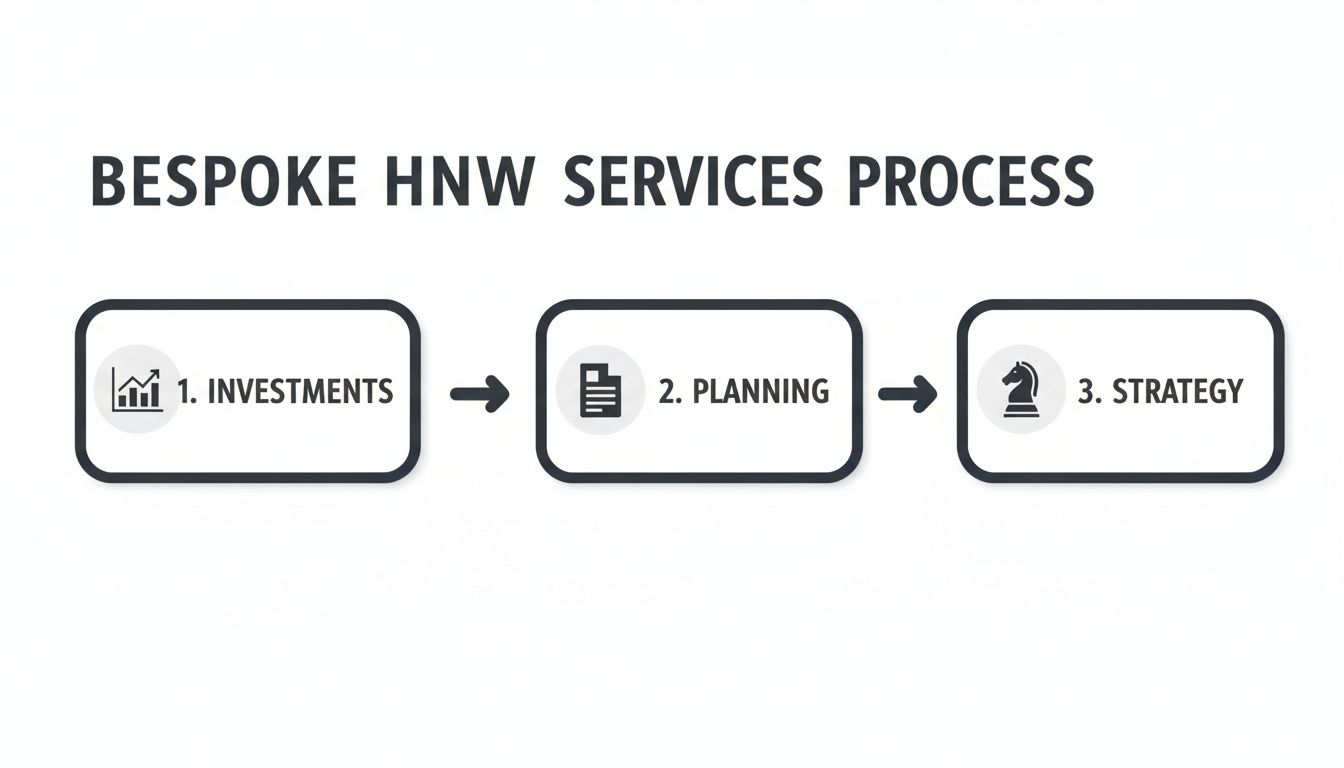
A good advisor seamlessly integrates investment management, financial planning, and broader family strategy into a continuous, proactive cycle.
Red Flags That Signal You Should Walk Away
Knowing what to look for is only half the battle. You also have to know which warning signs are immediate dealbreakers. In this business, you have to trust your gut — if something feels off, it almost certainly is.
Keep an eye out for these critical red flags during your interviews:
- Lack of Transparency: Any hesitation to talk about fees, fiduciary status, or how they’ve performed in the past is a huge problem.
- Pressure to Act Quickly: A true professional understands this is a big decision. High-pressure sales tactics are the mark of someone who doesn't have your best interests at heart.
- Promising Unrealistic Returns: Nobody can guarantee market performance. Anyone who claims they can deliver "guaranteed" or astronomical returns is either lying or dangerously naive.
- Pushing Proprietary Products: If the conversation keeps circling back to the firm’s own branded mutual funds or insurance products, their advice is likely compromised by commissions.
- Unwillingness to Collaborate: A great advisor should welcome the chance to work with your CPA, estate attorney, and other professionals. Resistance is a sign they’re a poor team player.
Building a Long-Term Advisory Partnership
Picking the right financial advisor for high net worth clients is a huge decision, but the real work starts after you sign on the dotted line. This onboarding process is where a lasting, multi-generational partnership is truly built.
It’s not just a transaction. It’s a deep dive meant to sync your wealth with your life’s goals. Knowing what to expect helps you become an active partner in your own financial future, from the first discovery meetings to the final presentation of your plan.
The Initial Discovery and Data Gathering Phase
Your first few meetings aren't about the markets. They're about you. Your advisor’s main job is to understand your story — your career wins, your family situation, your biggest worries, and your ultimate dreams. You should be ready to open up your entire financial life for inspection.
This means gathering every relevant document you can get your hands on. The more complete the picture you provide, the sharper and more effective your financial strategy will be. This data dump is the foundation for everything that follows.
Get these documents ready to go:
- Investment Account Statements: Records for brokerage, retirement (401k, IRA), and any alternative investments.
- Tax Returns: Your last two to three years are usually needed to get a handle on your tax picture.
- Legal Documents: Any wills, trusts, powers of attorney, or business-related papers like buy-sell agreements.
- Insurance Policies: Life, disability, long-term care, and property and casualty coverage.
- Liabilities: A list of mortgages, lines of credit, and any other debts you carry.
Setting Expectations and Defining Success
A solid advisory relationship is built on clear communication. One of the most important conversations you'll have early is defining what success actually looks like for you and how you'll both measure it. This goes way beyond simple investment returns.
Your key performance indicators (KPIs) should be tied directly to your life goals. Success might mean funding a new business venture in five years, creating a bulletproof estate plan that minimizes taxes for your heirs, or building a philanthropic legacy.
During this time, you and your advisor should lock down a formal communication schedule. It will likely cover:
- Quarterly Review Meetings: Scheduled sessions to review performance, talk about the market, and check progress toward your goals.
- Proactive Outreach: Your advisor should be the one calling you during major market shifts or when unique opportunities pop up.
- Defined Accessibility: A clear understanding of how and when you can get ahold of your advisory team for quick questions.
Nearly 80% of affluent investors say they want financial advice tailored to their specific circumstances. Getting this alignment right from the start ensures the service you get is truly yours, not some cookie-cutter template. By taking an active role here, you shift the dynamic from a simple service to a powerful strategic alliance for the long haul.
Your Final Questions, Answered
Even after you've done your homework, a few key questions always pop up right before you're ready to partner with a new financial advisor. Getting clear, confident answers to these last-minute uncertainties is the final step before you hand over the reins to your financial future.
Think of this as your last round of due diligence. A top-tier financial advisor for high net worth clients will welcome these questions and answer them with total transparency. It’s how they prove their expertise and commitment to you.
What’s the Real Difference Between 'Fee-Only' and 'Fee-Based'?
This is one of the most important questions you can ask, and it all comes down to how your advisor gets paid. It's simple, really. A "fee-only" advisor is paid only by you, their client. Their compensation might be a flat retainer, an hourly rate, or a percentage of the assets they manage (AUM).
A "fee-based" advisor, on the other hand, collects fees from you and earns commissions by selling you financial products, like certain mutual funds or insurance policies. This setup can create a serious conflict of interest. They might be tempted to recommend a product that pays them a bigger commission, not the one that’s actually best for your portfolio.
For anyone with significant wealth, a fee-only fiduciary is almost always the right choice. Their success is tied directly to yours, which means the advice you get is built around your goals, and nothing else.
How Often Will I Actually Hear From My Advisor?
Great communication is the foundation of any solid advisory relationship. You need to know what to expect from day one. While the exact rhythm can be tailored to your needs, any professional firm worth its salt will have a clear communication plan.
At an absolute minimum, you should have formal review meetings every quarter. These meetings are your chance to dig into the details:
- Reviewing your portfolio's performance against your goals and the market benchmarks.
- Talking through what's happening in the market and how it might affect your strategy.
- Checking in on your financial goals to see if anything in your life or business has changed.
But the best advisors don't just wait for scheduled meetings. They reach out proactively — when the market gets volatile, when a tax-planning opportunity arises, or when new laws could impact your estate. You should always feel like you're in the loop, never left wondering.
My Wealth Is Tied Up in a Family Business. What Kind of Specialist Do I Need?
If most of your net worth is locked inside a family business, you can't settle for a generalist financial planner. Your situation is far more complex. You need an advisor who is an expert in business succession, pre-liquidity event planning, and the kind of advanced tax strategies that work with corporate structures.
Look for specialized credentials, like the Certified Exit Planning Advisor (CEPA) designation. It’s a sign that an advisor has specific training in helping business owners navigate the sale or transition of their company. The right person will have a proven track record of guiding entrepreneurs through every stage of the process.
You're looking for a partner who can act as the quarterback for your entire financial life, working seamlessly with your CPA and corporate lawyer. They should be skilled at everything from structuring asset-protection trusts to building a diversified portfolio after a sale, all while creating a tax-efficient plan to protect your wealth for generations.
I’m a Pro Athlete. What Should an Advisor Be Looking Out For?
Professional athletes and entertainers are on a completely unique financial journey. The mission is to turn a few years of massive income into a lifetime of financial security. That demands an advisor who specializes in the distinct challenges faced by clients in the sports and entertainment world.
An advisor working with a pro athlete has to laser-focus on a few key areas that are very different from a typical client:
- Aggressive savings and a disciplined budget to make the most of those high-earning years.
- Multi-state tax planning to handle the complex tax bills that come from earning income in different states and countries.
- Ironclad insurance strategies, especially career-ending disability coverage, to guard against the unexpected.
- Long-term cash flow management designed to support your lifestyle long after the paychecks from your primary career stop.
The main goal here is to build a durable financial plan that provides security for a retirement that could easily last 50 years or more. Your advisor acts as a financial coach, a protector, and a long-term strategist to help turn a brilliant, but short, career into a lasting legacy.
How Should an Advisor Get Involved With My Estate Plan?
Your estate plan is so much more than a will. It’s a complete strategy for passing on your wealth the way you want, while minimizing taxes and legal headaches. A high-net-worth financial advisor plays a crucial coordinating role in this process. They don’t draft the legal documents — that’s your attorney's job — but they make sure your financial strategy and legal structure are perfectly aligned.
Your advisor should be working hand-in-hand with your attorney on strategies like:
- Funding Trusts: Making sure assets are properly titled and moved into any trusts you create.
- Maximizing Gift Exclusions: Structuring annual gifts to your heirs to be as tax-efficient as possible. In 2025, the annual gift exclusion is $19,000 per beneficiary.
- Charitable Planning: Helping you set up philanthropic gifts, whether through donor-advised funds or a private foundation, to maximize both your impact and your tax benefits.
An advisor's job is to make your estate plan a living, breathing part of your financial life — not just a stack of papers in a drawer. They are responsible for executing the financial side of the plan your legal team builds.
At Commons Capital, we understand the intricate financial needs of high-net-worth individuals, families, and professionals. Our team is dedicated to providing the specialized guidance and comprehensive strategies required to protect and grow your wealth for generations to come. To learn how our bespoke advisory services can help you achieve your most ambitious goals, visit us at Commons Capital.


